

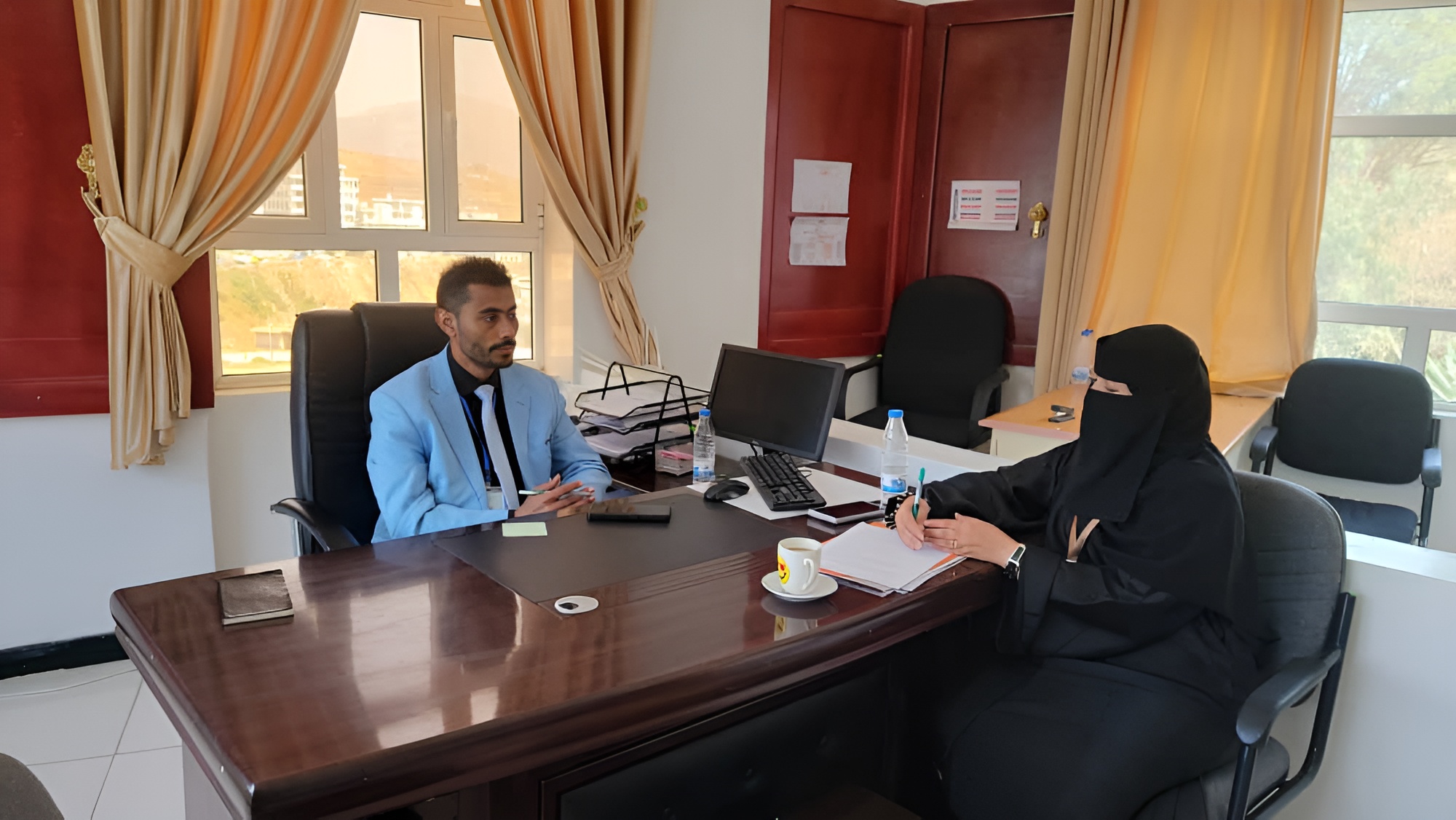
In line with the strategic initiatives of Jiblah University for Medical and Health Sciences and the instructions of His Excellency, the University Rector, Professor Dr Abdullah Mohammed Al-Matari, aimed at optimizing academic performance and elevating educational outcomes through a unified team spirit, a high-level meeting was held on Tuesday, February 3, 2026.
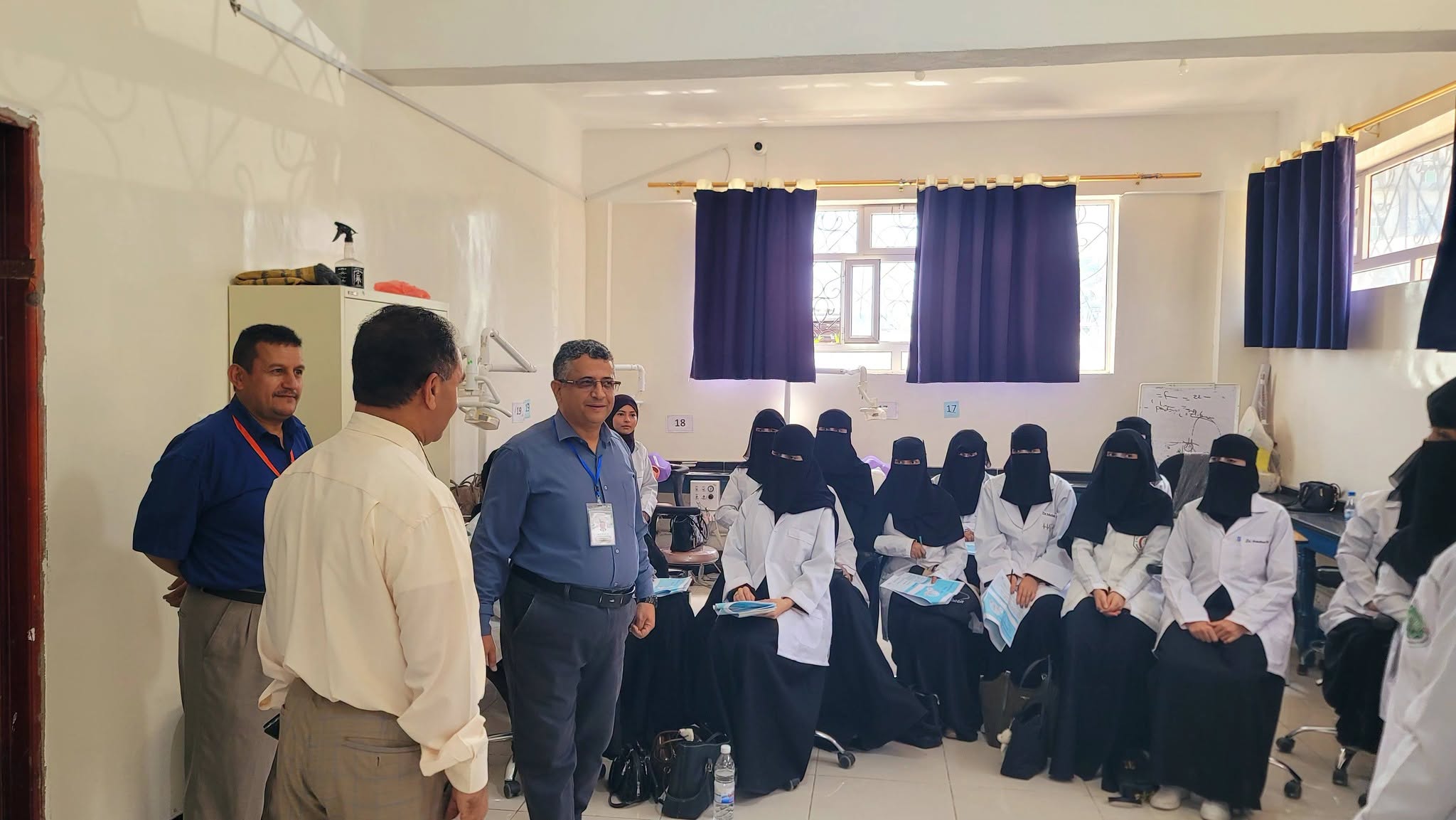
The meeting convened Dr. Mujeeb Ali Al-Saidi, Dean of Center for Development and Quality Assurance and Ms. Fullah Al-Akhshar , the Assistant General Manager for Quality Affairs and Director of Total Quality Management (TQM) at Jiblah University Hospital. The discussions focused on several pivotal issues regarding quality standards and clinical training across the university’s faculties.
Key discussion pillars are:
- Clinical training standardization: Organizing clinical training and unifying student assessment methodologies within the practical environment to ensure the attainment of core professional competencies.
- Professional ethics & patient safety: Strengthening the foundations of medical ethics and promoting the principles of patient safety among trainees.
- Accreditation alignment: Reviewing mechanisms to align clinical practices with the requirements of the Council for Academic Accreditation in accordance with the approved national standards.
During the session, Dean of Center for Development and Quality Assurance emphasized that Jiblah University Hospital serves as the corner stone for the accreditation of the university’s faculties. He also noted that the hospital provides the authentic environment where learning outcomes are tested, and theoretical knowledge is transferred into practical skills, describing it as a qualitative strategic strength due to its institutional readiness and integrated clinical departments.
Both parties stressed the importance of institutional integration and fostering a collaborative team spirit between the Center for Development and Quality Assurance and the hospital’s TQM Department. This synergy is vital for improving the university’s outputs and ensuring the satisfaction of both staff and beneficiaries.
Furthermore, in implementation of the University Rector’s recommendations regarding the development of soft skills for the hospital and administrative staff, both sides agreed to launch a series of specialized training programs. These programs aim to enhance staff efficiency, improve administrative performance, and support the overall advancement of the institutional excellence.