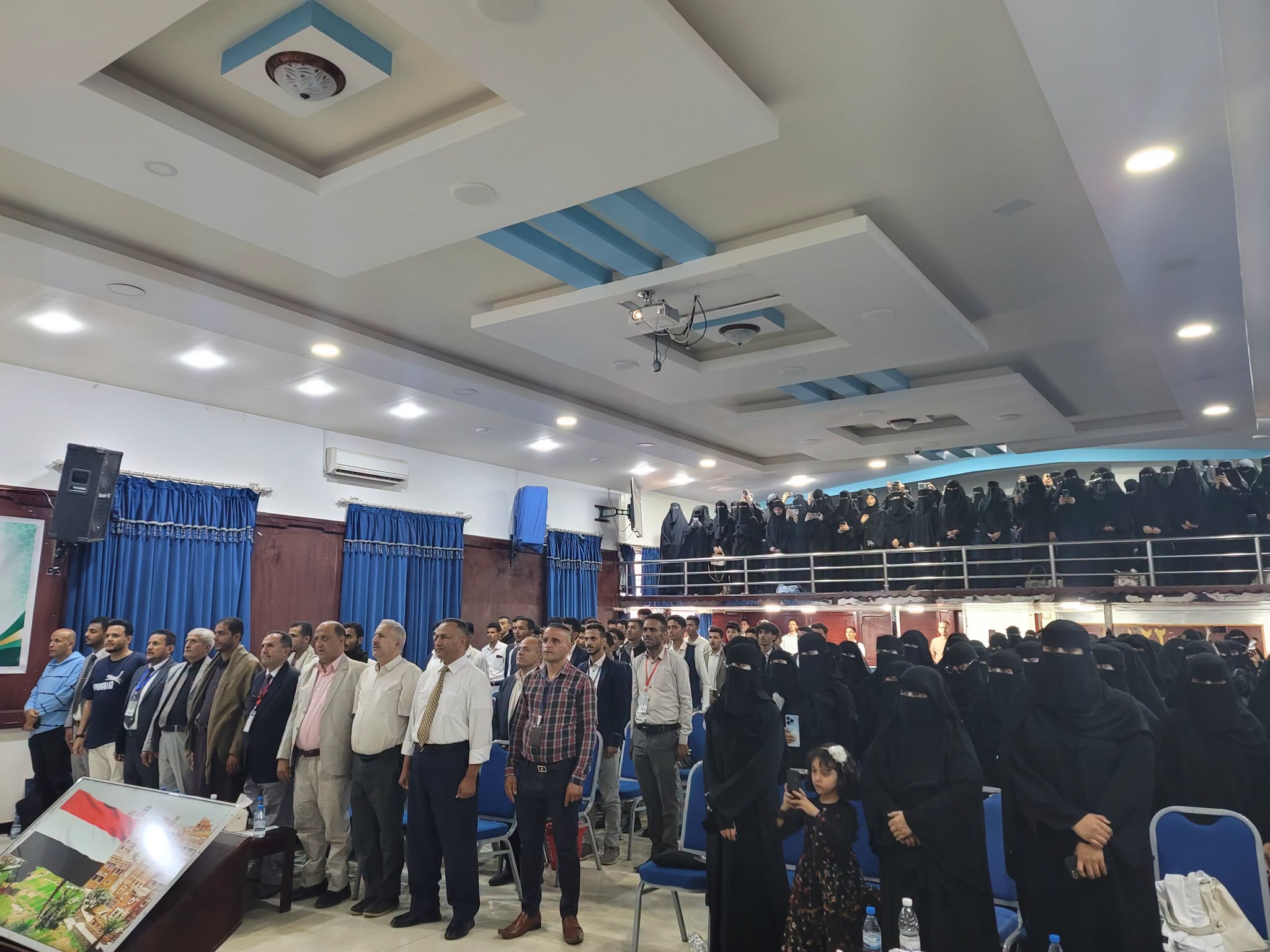


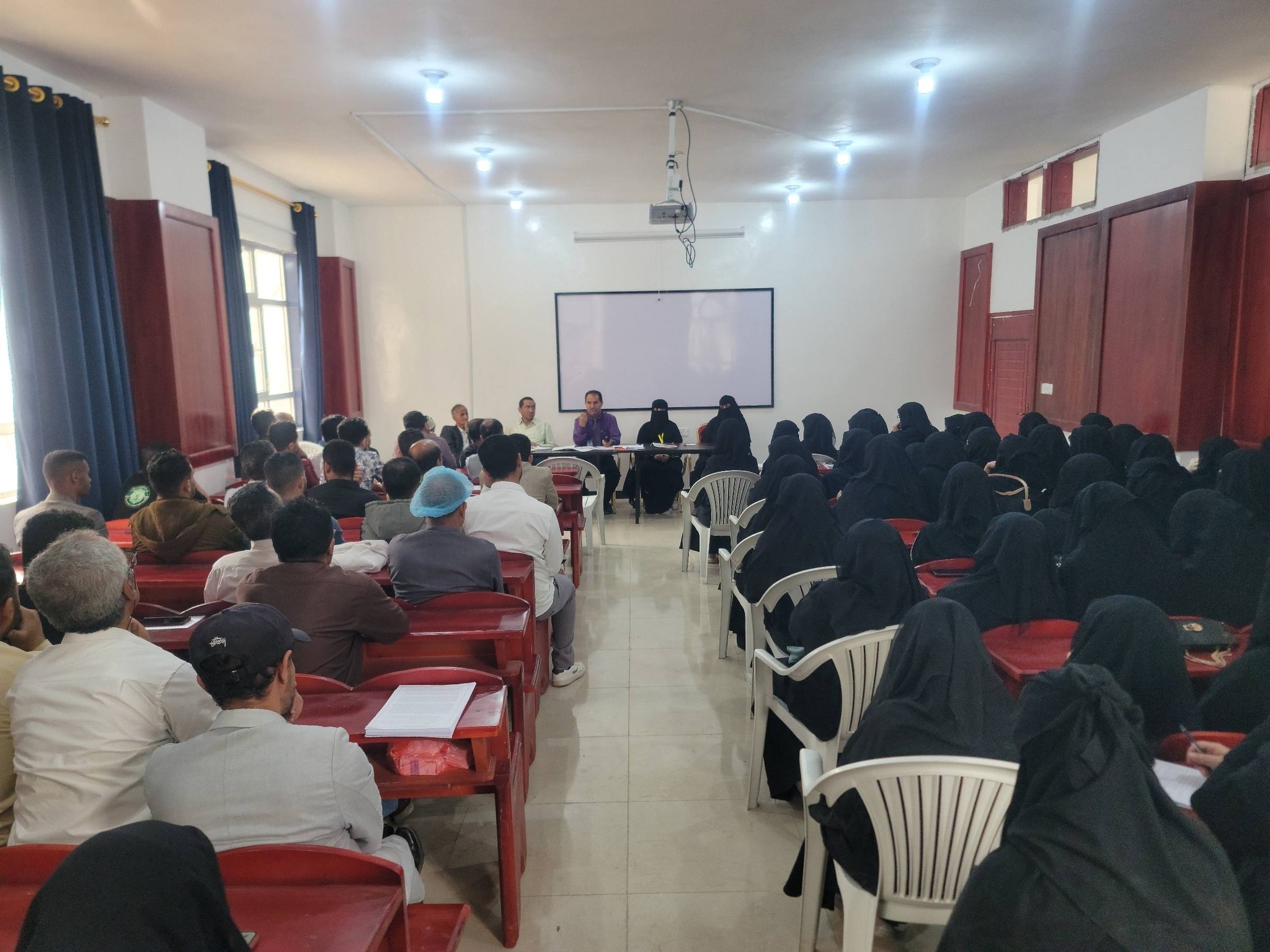
An expanded meeting was held today at Jibla University Hospital, chaired by Professor Dr. Abdullah Mohammed Al-Matari, Rector of the University and General Director of the Hospital. The meeting was attended by the Assistant General Director for Quality Affairs, heads of the departments, administrative officials, physicians, nursing and midwifery staff, and a number of technical personnel. This comes within the framework of the hospital administration’s direction toward consolidating professional discipline and enhancing the quality and safety of healthcare services.
At the outset of the meeting, Rector of the University and General Director of the Hospital emphasized that the current phase requires a thorough review of both clinical and administrative performance, and working in a spirit of teamwork to ensure the provision of safe medical services in accordance with approved professional standards.
He noted that the administration views challenges as opportunities for improvement and development, particularly with regard to enhancing the efficiency of initial patient assessment, improving the accuracy of medical history taking, and refining medical documentation mechanisms to clearly and comprehensively reflect the treatment pathway. He explained that improving the quality of medical records, completing essential data, organizing verbal and written medical orders, and ensuring their review and documentation within specified timeframes constitute a fundamental pillar for protecting patients, the institution, and healthcare personnel alike.
He also stressed the importance of adhering to approved treatment protocols, especially in critical cases, and enhancing rapid clinical response to reduce complications and promote patient safety. The rector further highlighted the necessity of regulating Discharge Against Medical Advice (DAMA) procedures within clear legal frameworks, ensuring completion of all relevant documentation requirements to guarantee transparency and safeguard rights. He also directed stricter control over the use of the electronic system and user accounts to maintain data confidentiality and prevent any administrative or legal violations.
For his part, the Assistant General Director for Quality Affairs reviewed improvement areas related to performance indicators over the past period, emphasizing the importance of analyzing the causes of certain recorded complications and addressing them by developing triage and early assessment procedures, enhancing professional integration within departments, and combining accumulated experience with the modern knowledge of newly recruited staff.
He affirmed that key priorities for the upcoming phase include strengthening compliance with monitoring vital signs for high-risk cases—particularly hypertensive patients—according to approved schedules; regulating the use of high-alert medications such as oxytocin in line with established protocols; updating emergency case management policies; and activating rapid response teams. He also pointed to the importance of continuous staff training in life-saving skills, foremost among them Cardiopulmonary Resuscitation (CPR), improving sterilization practices and infection control within departments, and reviewing referral rates outside the hospital to ensure they are based on clear medical criteria reflecting the institution’s actual capacity and capabilities.
At the conclusion of the meeting, University Rector and General Director of the Hospital affirmed that the hospital administration will follow up on the implementation of the recommendations through specific timelines and clear monitoring mechanisms, ensuring a qualitative leap in performance and consolidating a culture of quality as a daily practice and a collective responsibility, with patient safety and strengthening trust in the provided services as the foremost objectives.