

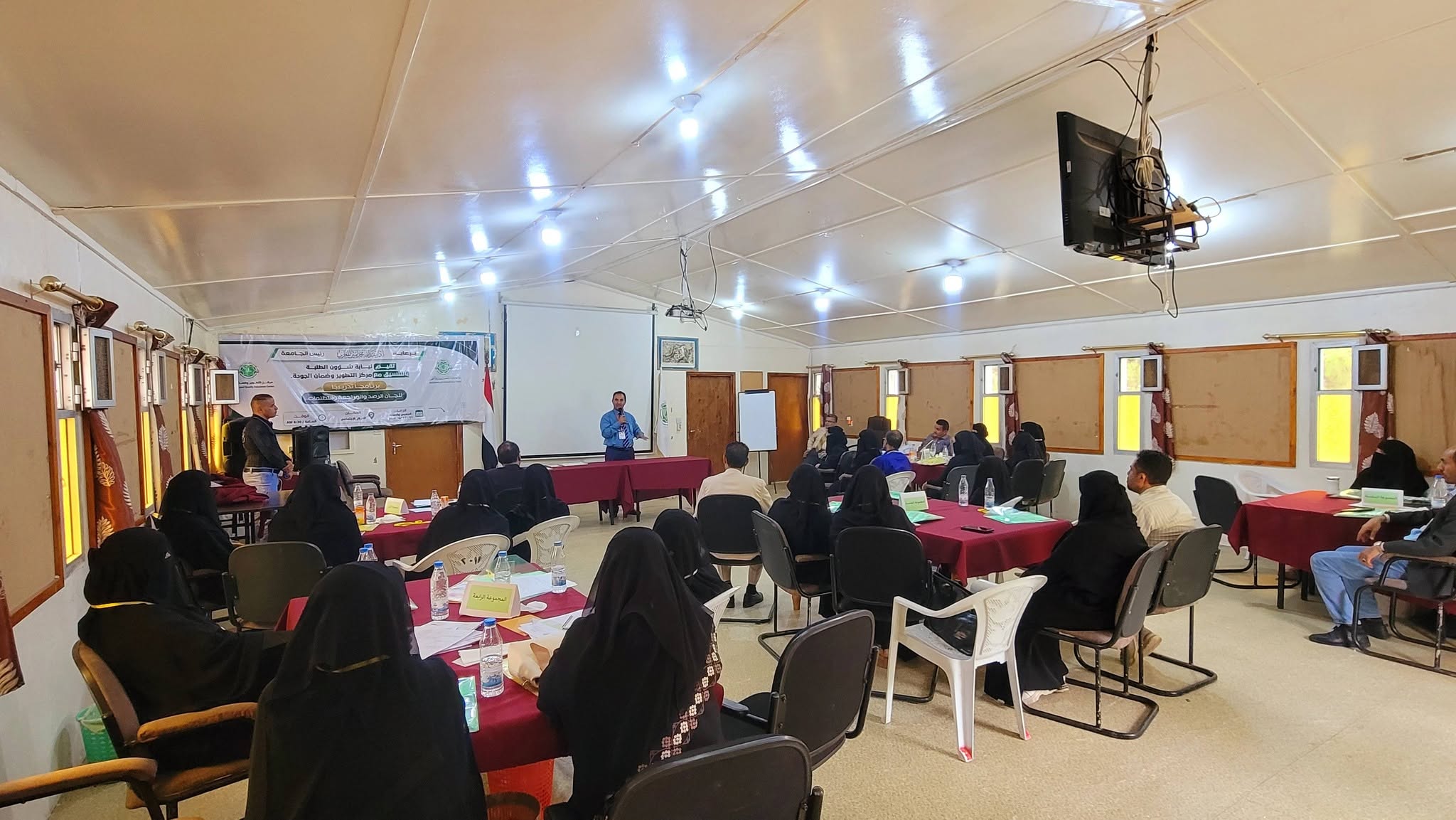
The training program for the Grade Recording, Review, and Appeals Committees concluded today, Saturday, June 13, 2026. The program was organized by the Center for Development and Quality Assurance under the patronage of Prof. Abdullah Mohammed Al-Matari, Rector of the University, and was conducted over two training days with participants from various university colleges. The program was part of the university’s ongoing efforts to enhance the quality of examination processes and improve the competencies of academic and administrative staff.
The final day featured two training sessions delivered by Prof. Ahmed Ali Al-Hazmi, Dean of the Faculty of Laboratory Medicine. The first session focused on review, auditing, and quality assurance, highlighting the mechanisms and procedures necessary to ensure the accuracy of grade recording and review processes, while enhancing the reliability of final examination results. The second session was dedicated to appeals management and examination booklet review, during which participants examined the procedures governing the submission, assessment, and handling of student appeals in accordance with approved academic regulations and policies, ensuring fairness, transparency, and the protection of students’ rights.
At the conclusion of the program, Prof. Abdullah Mohammed Al-Mutari, Rector of the University, praised the efforts of the Center for Development and Quality Assurance in preparing and implementing the program. He commended the effective contributions of the organizing committees and the work team in ensuring the success of the event and achieving its training objectives. The rector emphasized that improving the performance of examination committees is a fundamental pillar in advancing the educational process. He noted that the university remains committed to adopting specialized programs that strengthen academic quality and enhance assessment and evaluation systems in line with accreditation requirements and modern standards of higher education.
He also expressed his appreciation to Prof. Ahmed Ali Al-Hazmi, the program trainer, commending the quality of the training content and practical applications included in the program, which contributed to developing participants’ capabilities and enhancing their knowledge and skills in managing grade recording, review, and appeals processes. He further noted that the significance of this program stems from its direct connection to the integrity and accuracy of examination procedures, as well as its role in standardizing processes and improving institutional performance. These outcomes positively impact the quality of educational outputs and strengthen the confidence of students and the wider community in the university.
For his part, Dr. Mogeeb Ali Alsaeedi, Dean of the Center for Development and Quality Assurance, explained that the program is part of the center’s strategic plan to build the capacities of staff across academic and administrative units and to promote a culture of quality and continuous improvement. He affirmed that the center will continue to implement specialized training programs that support the university’s pursuit of institutional excellence and academic accreditation.
At the end of the program, certificates were awarded to participants in recognition of their commitment and active engagement throughout the training sessions. Participants and organizers praised the program’s high organizational and academic standards and its success in achieving its objectives of enhancing the skills of members of the Grade Recording, Review, and Appeals Committees and improving their professional performance. This program forms part of a series of developmental initiatives implemented by Jiblah University for Medical and Health Sciences, reflecting its ongoing commitment to promoting quality, academic governance, and institutional excellence across all educational and administrative domains.
Public Relations and Media
Basheer Al-Ba’dani